Why Decorative Salt Walls Do Not Create Halotherapy
Understanding the Difference Between a Decorative Salt Installation and a True Therapeutic Salt Cave
Understanding the Difference Between a Decorative Salt Installation and a True Therapeutic Salt Cave
As salt therapy continues to gain popularity across the United States, more spas, wellness centers, yoga studios, hotels, and medical practices are seeking ways to incorporate Himalayan salt into their facilities.
Unfortunately, a growing misconception has emerged within the wellness industry: the belief that installing a decorative salt wall automatically creates a therapeutic salt environment.
Nothing could be further from the truth.
While a decorative Himalayan salt wall can be visually stunning, it does not create halotherapy. In many cases, business owners spend thousands of dollars on beautiful salt installations, expecting therapeutic benefits, only to discover that the room functions primarily as a design feature rather than a true salt-therapy environment.
Understanding the difference between a decorative salt wall and a professionally designed salt cave can help business owners make informed decisions and avoid costly mistakes.
What Is Halotherapy?
Halotherapy, often referred to as dry salt therapy, originated from observations made in Eastern European salt mines where workers appeared to experience fewer respiratory issues than the general population.
Modern halotherapy recreates this environment by dispersing microscopic dry salt particles into a controlled room using specialized equipment known as a halogenerator.
A true halotherapy environment relies on three essential components:
- Himalayan salt on the four walls.
- Climate control
- A properly calibrated halogenerator
When these components work together, they create a controlled therapeutic environment designed specifically for salt therapy sessions.
Without all three components, the room is not functioning as a true halotherapy space.
The Growing Popularity of Decorative Salt Walls
Decorative salt walls have become increasingly popular in:
- Spas
- Hotels
- Wellness centers
- Restaurants
- Fitness facilities
- Private residences
There is no denying their visual appeal.
Illuminated Himalayan salt creates a warm glow that immediately captures attention and contributes to a relaxing atmosphere.
Because of their beauty, many business owners assume that installing a salt wall will provide the same experience as a therapeutic salt cave.
Unfortunately, appearance and function are two very different things.
The Biggest Myth in the Salt Industry
One of the most common misconceptions is:
"If I cover a wall with Himalayan salt bricks, I have created halotherapy."
This statement is simply incorrect. A salt wall by itself does not generate the microscopic dry salt particles required for halotherapy.
The wall remains stationary.
The salt remains attached to the wall.
Without a mechanism to aerosolize salt particles into the air, guests are simply sitting near salt rather than participating in a halotherapy session.
This distinction is critical.
A decorative salt wall can enhance a room's ambiance, but it cannot replace a properly designed halotherapy system.
Why One Salt Wall Is Not Enough
Imagine purchasing a fireplace and never lighting it. It may look beautiful, but it is not providing heat. The same concept applies to one salt wall. The salt itself may be present, but the room lacks the environmental systems required for a therapeutic salt session.
Many consumers do not understand this difference, which can lead to confusion and unrealistic expectations.
Business owners who invest in a single installation without understanding halotherapy often find that the room does not perform as expected.
The Role of the Halogenerator
An important component of a halotherapy environment is the halogenerator.
A halogenerator:
- Grinds pharmaceutical-grade salt
- Creates microscopic dry salt particles
- Disperses those particles into the room
- Controls particle concentration
Without a halogenerator, there is no controlled delivery of salt particles into the breathing zone.
Why Climate Control Matters
Another frequently overlooked component is climate control.
Himalayan salt is hygroscopic, meaning it naturally attracts moisture from the surrounding air.
Without proper environmental management, salt can:
- Absorb humidity
- Deteriorate over time
- Lose its visual appeal
- Require increased maintenance
A professionally designed salt cave includes systems that help maintain environmental conditions suitable for both the salt materials and the halotherapy equipment.
Climate control is not simply an optional upgrade.
It is a critical component of a functional salt cave.
The Difference Between a Salt Wall and a Salt Cave
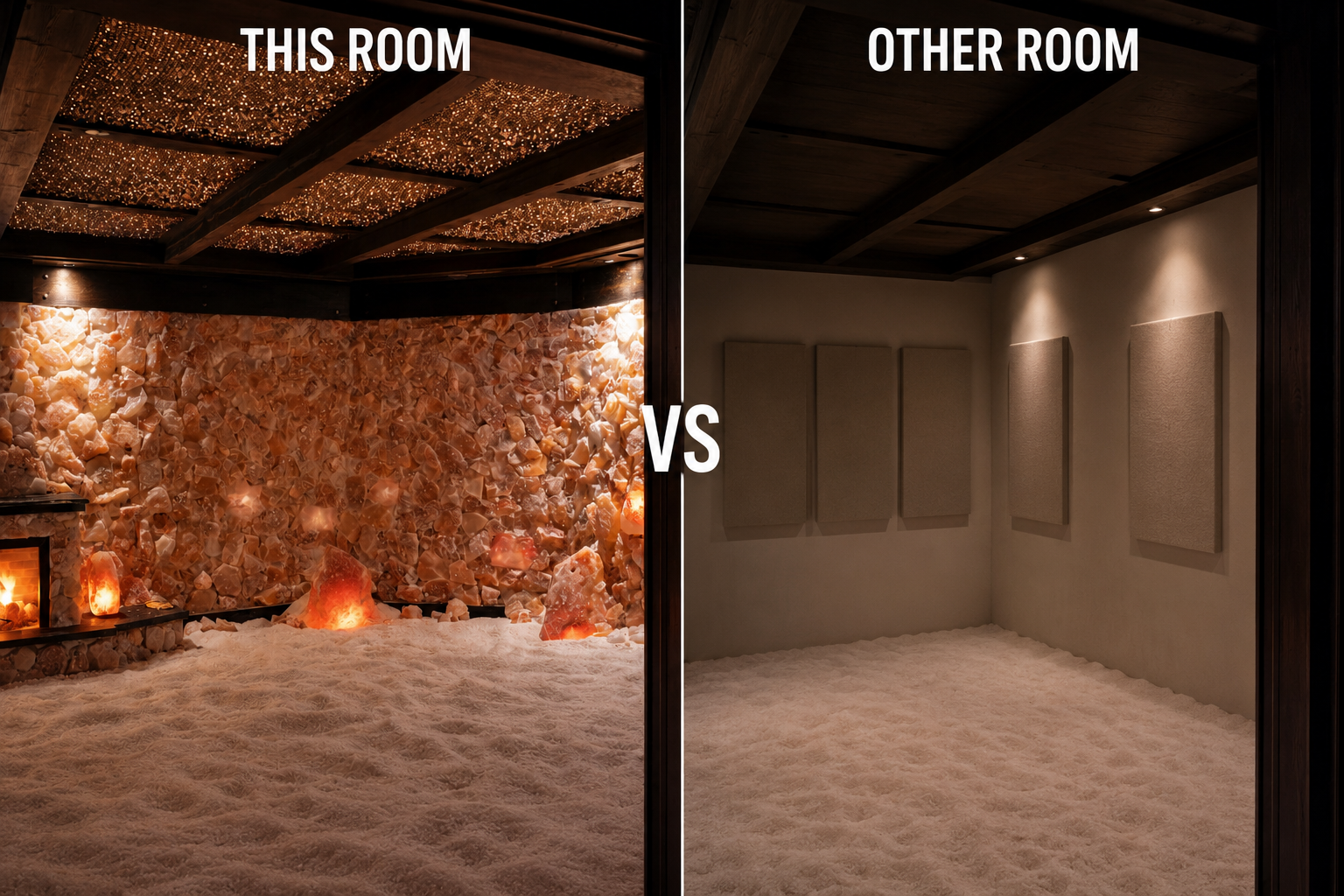
A decorative salt wall is primarily a design element.
A salt cave is an engineered environment.
Decorative Salt Wall
- One wall of salt
- Visual enhancement
- Ambient lighting
- No climate control
- No halogenerator
- No therapeutic salt particle delivery
True Salt Cave
- Salt-covered walls
- Salt flooring
- Climate-controlled environment
- Professional halogenerator
- Designed specifically for halotherapy
- Immersive wellness experience
The difference is significant.
One is decorative.
The other is functional.
Why Guests Notice the Difference
Today's wellness consumers are increasingly educated.
Many guests who have visited authentic salt caves immediately recognize when a facility offers only a decorative salt installation.
A true salt cave provides:
- An immersive environment
- Controlled conditions
- Purpose-built design
- A complete wellness experience
Decorative salt walls can be attractive, but they rarely create the same impact or level of engagement.
Businesses that invest in authentic salt cave construction often report stronger client retention and increased word-of-mouth referrals because the experience feels unique and memorable.
The Financial Impact of Choosing the Wrong Approach
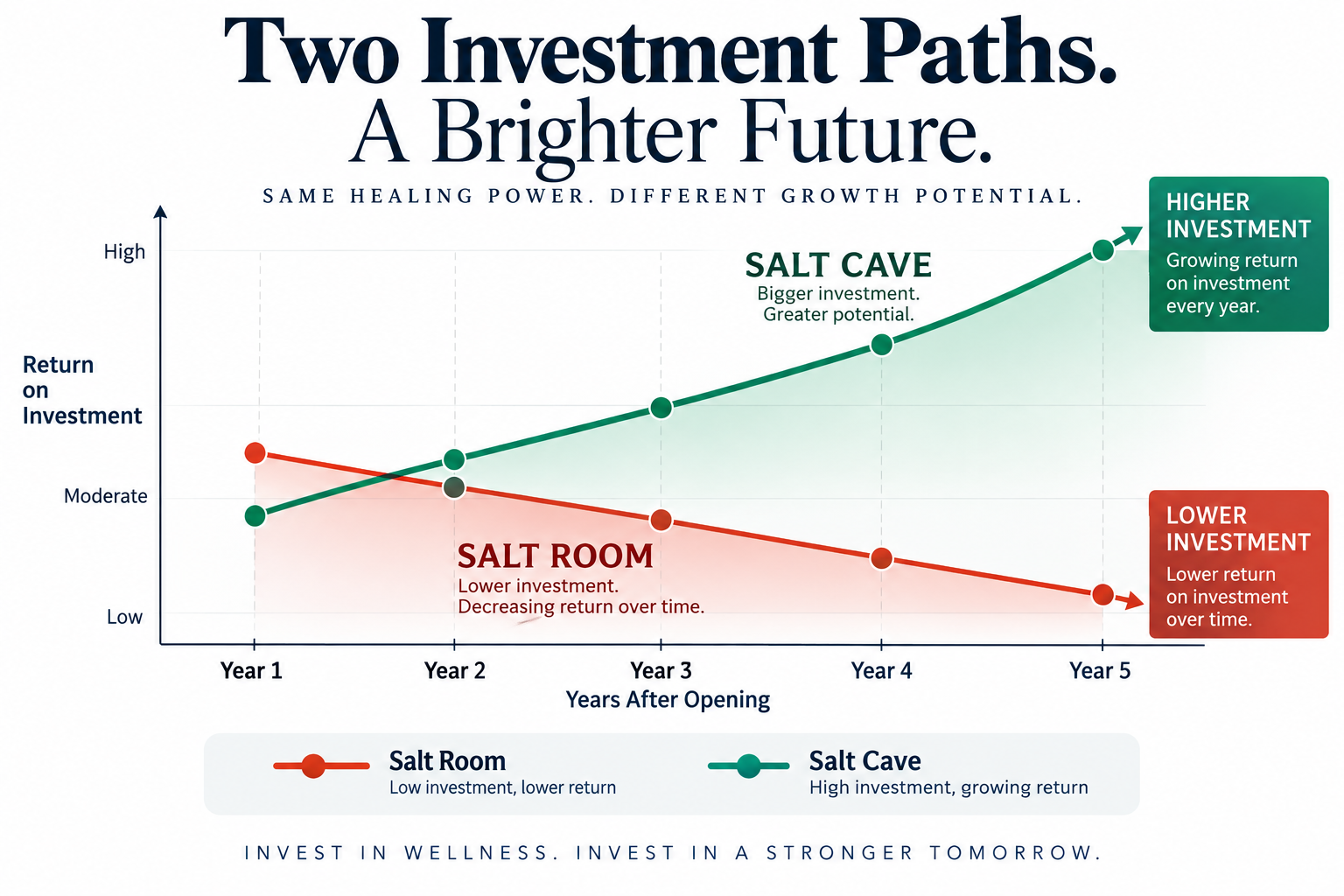
Many business owners initially choose decorative salt walls because they appear less expensive.
However, this decision can become costly.
When clients expect a therapeutic experience and receive only a decorative environment, disappointment can affect:
- Reviews
- Repeat visits
- Referrals
- Membership sales
In many cases, businesses eventually decide to upgrade to a true halotherapy room after realizing the limitations of decorative installations.
This often results in paying twice for the same project.
The most economical solution is often designing the room correctly from the beginning.
Common Features Found in Decorative Salt Rooms
Several design choices frequently indicate that a room was designed primarily for appearance rather than performance.
Examples include:
- Large windows
- Decorative curtains
- Visible HVAC grilles
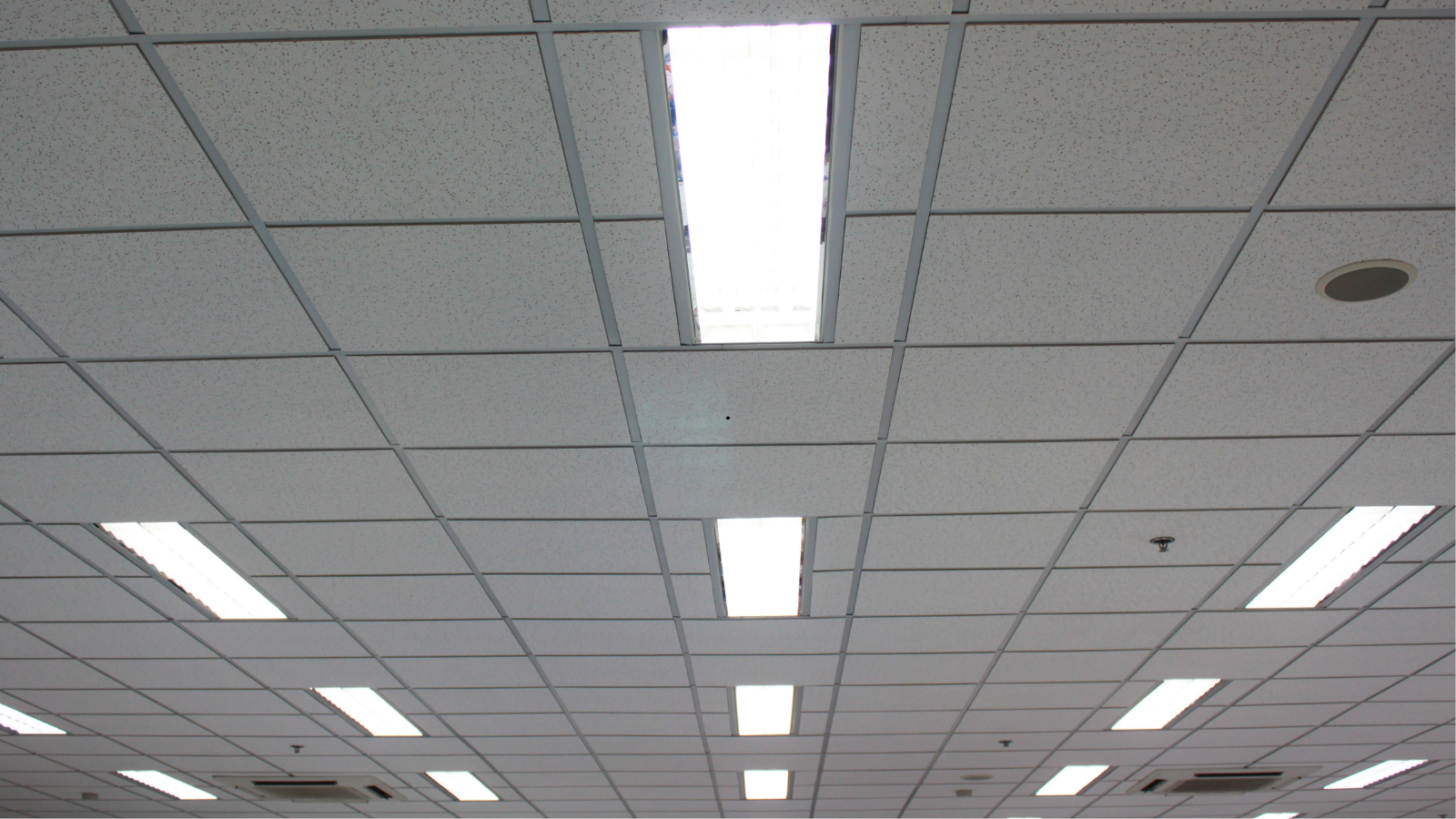
- Standard drop ceilings
- Mini-split systems installed directly inside the room
- Decorative lighting with little environmental planning
While these features may not prevent a room from looking attractive, they often indicate that halotherapy performance was not the primary design objective.
Why Experience Matters When Building a Salt Cave
Salt cave construction is unlike traditional remodeling projects.
A successful installation requires knowledge of:
- Salt materials
- Environmental controls
- Airflow management
- Halotherapy equipment
- Wellness design
- Building codes
A contractor who builds beautiful rooms may not understand the requirements of a therapeutic salt environment.
This is one reason many wellness businesses choose specialized salt cave builders rather than general contractors.
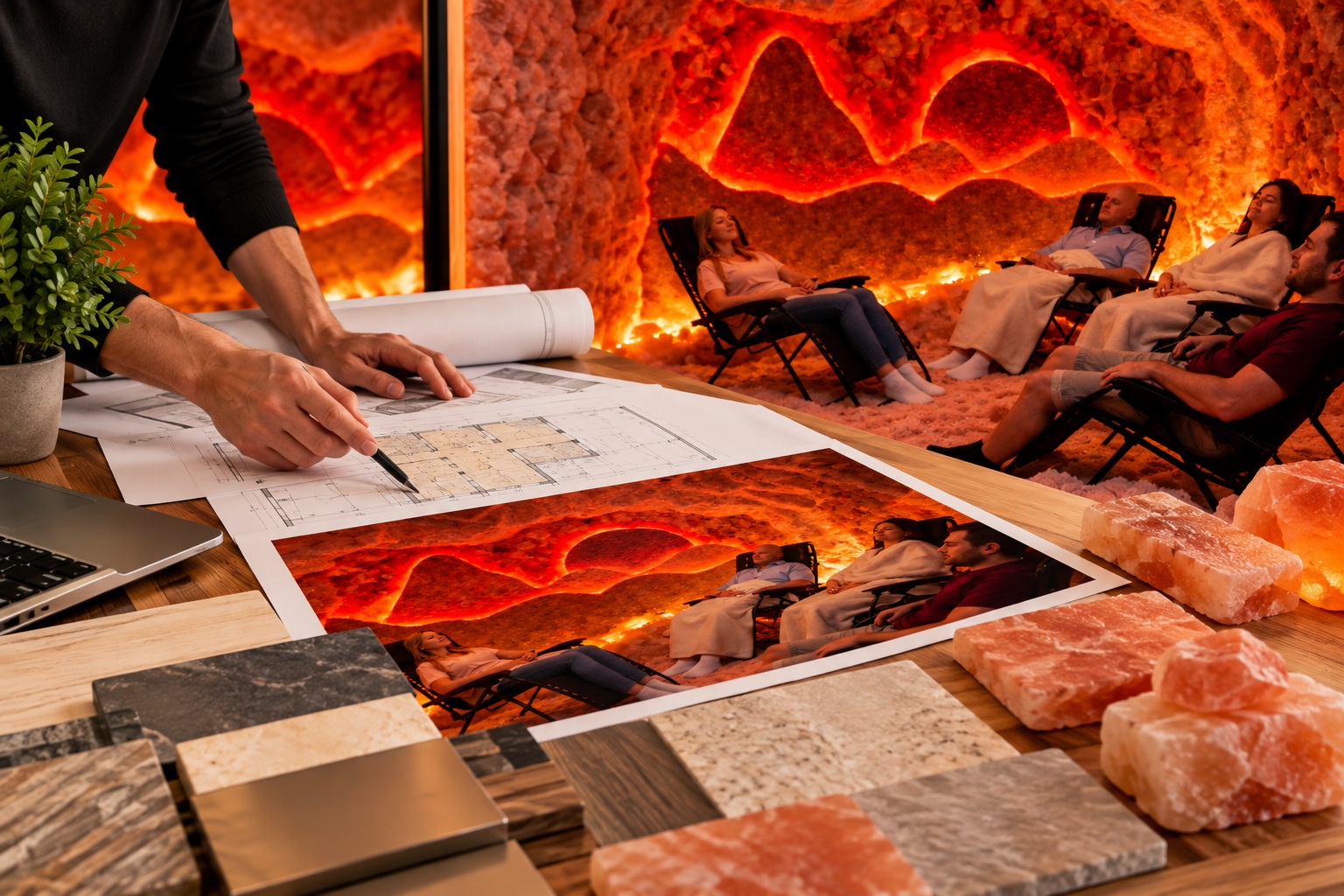
Creating an Experience, Not Just a Room
The most successful salt caves offer more than halotherapy.
They create an experience.
Guests are looking for:
- Relaxation
- Stress relief
- Escape from daily life
- A unique wellness destination
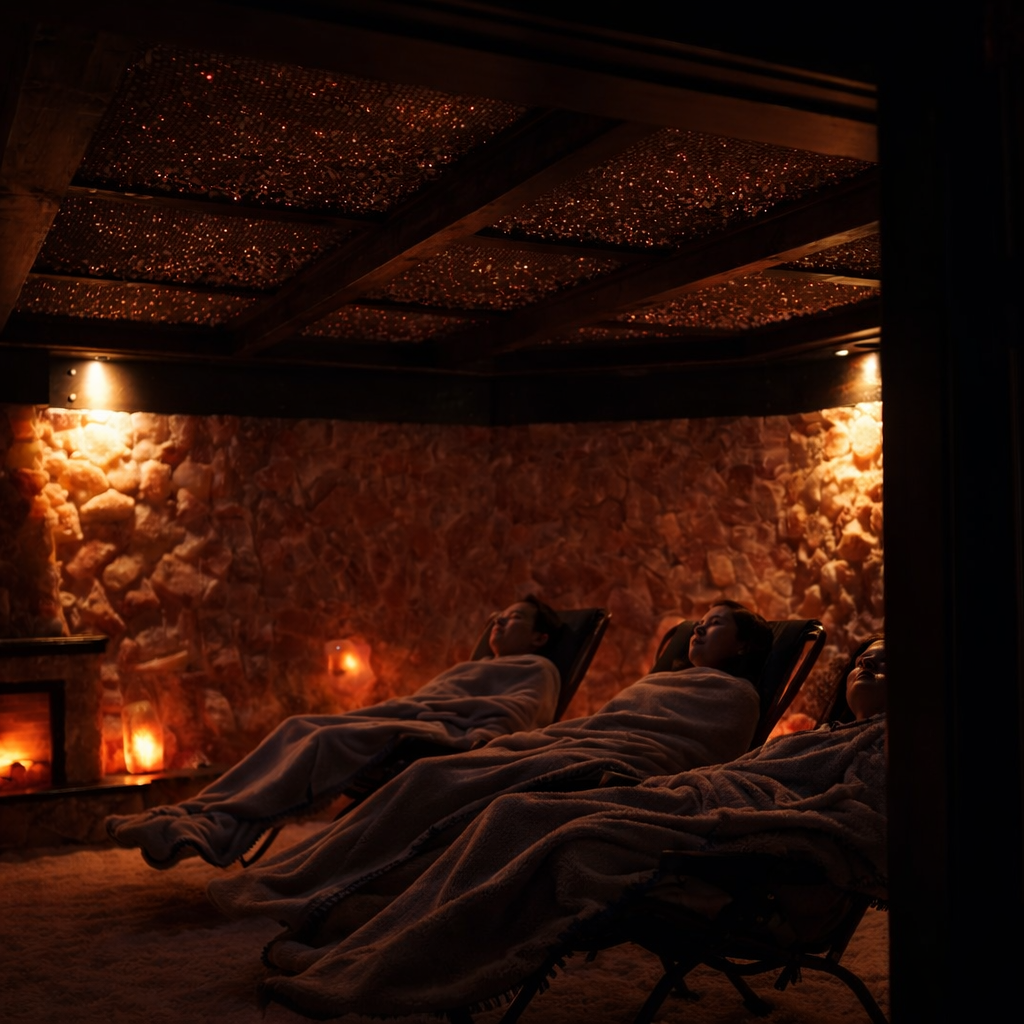
Features such as:
- Star ceilings
- Glowing salt walls
- Comfortable seating
- Carefully designed lighting
- Natural textures
Transform a room into a memorable wellness attraction.
The goal is not simply to surround people with salt.
The goal is to create an environment that encourages them to return again and again.
Questions to Ask Before Investing in a Salt Wall
Before hiring a salt cave builder, ask:
- Does the room include a halogenerator?
- How is humidity controlled?
- Is the environment designed specifically for halotherapy?
- Has the builder completed therapeutic salt caves before?
- Is the project focused on appearance or performance?
The answers can reveal whether the room is a decorative feature or a true therapeutic environment.
The Future of Salt Therapy
As the salt therapy industry matures, consumers are becoming more informed.
Business owners who understand the difference between decorative salt walls and authentic halotherapy environments will be better positioned to provide meaningful experiences and stand out in an increasingly competitive marketplace.
The future belongs to facilities that prioritize quality, education, and authentic design over shortcuts and visual trends.
Final Thoughts
Decorative salt walls can be beautiful additions to spas, wellness centers, hotels, and homes. They create a warm atmosphere and can serve as impressive design features.
However, it is important to understand what they are and what they are not.
A decorative salt wall does not create halotherapy.
True halotherapy requires a carefully designed environment that includes Himalayan salt construction, climate control, and a properly calibrated halogenerator working together as a complete system.
For business owners considering salt therapy, understanding this distinction can prevent costly mistakes and ensure that your investment delivers the experience your clients expect.
The difference between a decorative salt wall and a true salt cave is the difference between a beautiful room and a purpose-built therapeutic environment.
When designed correctly, a salt cave becomes more than a room—it becomes a destination.