Why Climate Control Is Critical in Salt Rooms
Most salt rooms fail due to poor climate control and DIY mistakes. Learn how improper HVAC design can damage buildings and put clients at risk.
The Importance of Climate Control in Salt Rooms and Salt Caves.
We cannot stress this enough: most salt rooms fail not because of salt therapy itself, but because of poor engineering and improper climate control.
Too many salt room projects are built by people who simply do not understand how salt behaves in a controlled environment. Salt caves and salt therapy rooms are not decorative wellness features; they are highly specialized environments. When climate control is ignored or misunderstood, the result is equipment failure, building damage, and serious health risks for clients.
Climate Control Failures Are the #1 Reason Salt Rooms Fail
The biggest problem in the salt room industry is the lack of knowledge about proper engineering.
Climate control is not optional. Salt therapy requires precise management of humidity, airflow, pressure, and temperature. When these elements are not correctly designed, salt rooms quickly deteriorate.
Improper climate control leads to excessive moisture, uneven salt distribution, and airborne salt escaping into areas where it does not belong.
Over time, this leads to corrosion, system failures, and unsafe indoor air quality. Many salt room owners only realize this after their room stops working or, worse, after costly damage has already occurred.
Improper Salt Room Construction Can Damage the Entire Building
When a salt cave or salt room is not constructed correctly, the damage does not stop at the therapy space. Salt migrates. It moves through ductwork, walls, ceilings, and shared air systems. Once salt enters the building’s HVAC system.
Even more concerning, salt can spread into offices, treatment rooms, electrical closets, and common areas. This creates long-term structural damage and can compromise indoor air quality throughout the building. In severe cases, entire HVAC systems must be replaced, and remediation costs can exceed the original cost of building the salt room.
DIY Salt Cave Mistakes and Dangerous Salt Generator Advice
Relying solely on a salt generator company’s recommendations is often the first and most costly mistake DIY salt cave builders make.
Many of these plans are not aligned with U.S. building codes or the building codes of any developed country.
Salt therapy rooms and salt therapy caves are major construction projects, not decorative upgrades.
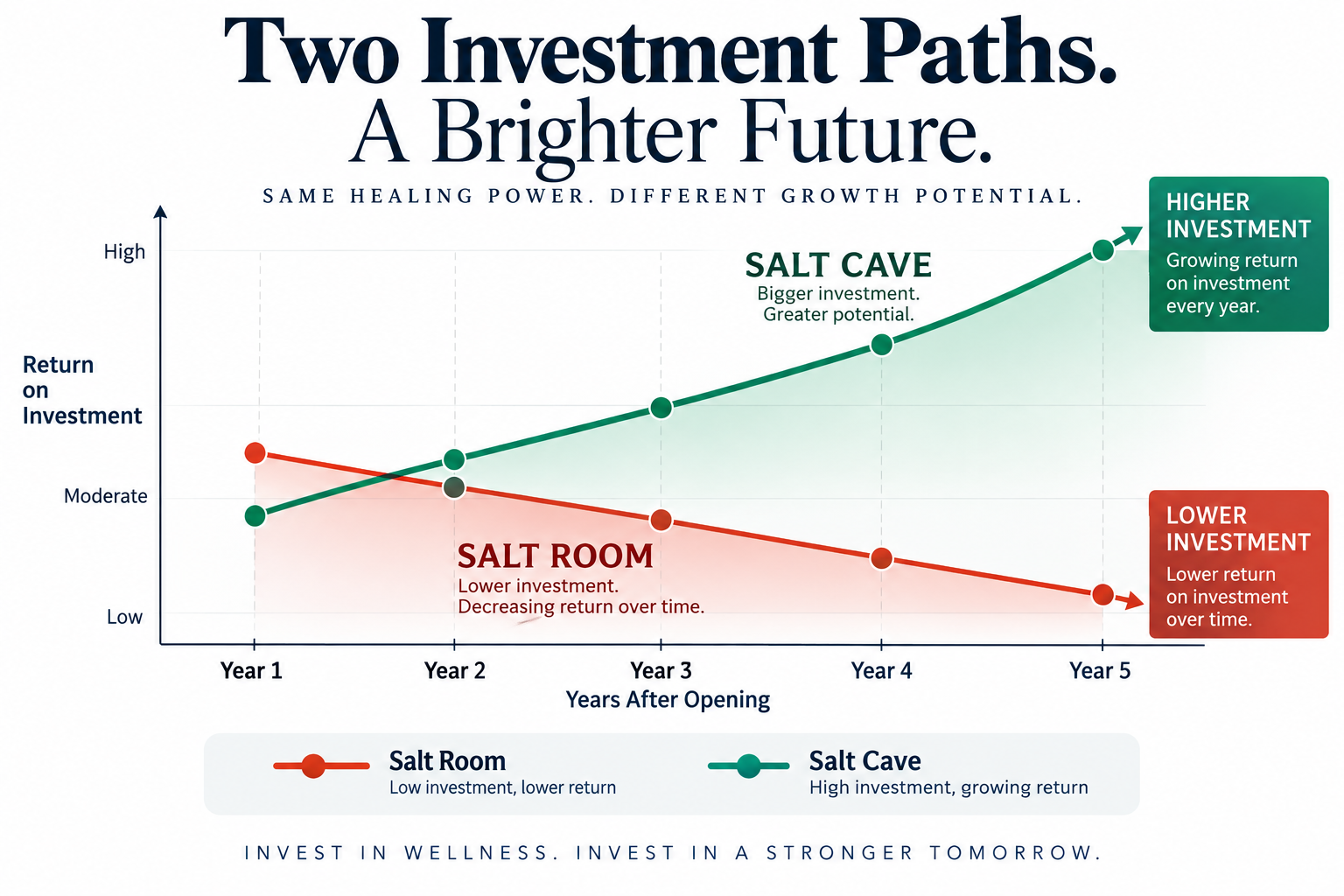
DIY Salt Caves Cost More in the Long Run
Building a DIY salt cave may seem like a way to save money upfront, but in reality, it often leads to spending double—or more—later to fix mistakes.
This is not just about construction—it is about protecting people’s health and safety. Cutting corners in a salt therapy environment puts lives at risk.
Build It Once. Protect Your Clients. Grow a Successful Business.
If you want a salt therapy facility that lasts, performs correctly, and keeps your clients safe, it must be built right the first time. Climate control, engineering, and material selection are not optional; they are the foundation of a successful salt room business.
Contact us today to have your salt room or salt cave professionally designed and constructed. We help you avoid costly mistakes, protect your building, and create a safe, compliant, and profitable salt therapy environment that you can be proud of. 802-770-3138, saltcavevt@gmail.com