Salt Cave Investment: Build a Salt Room for Stronger ROI
Learn why professional salt room construction, complete salt wall building, and thoughtful salt cave design can support stronger returns and long-term growth.
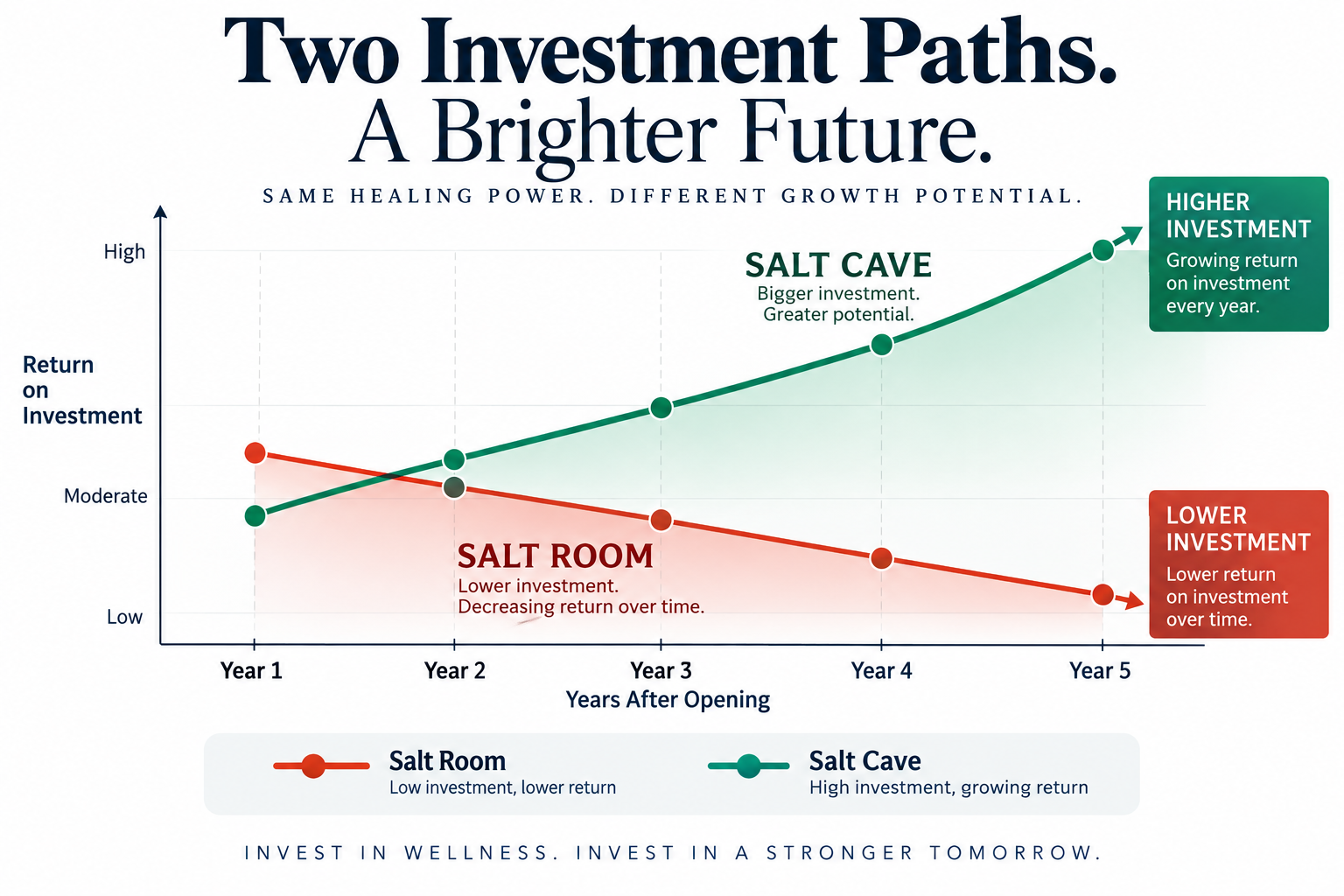
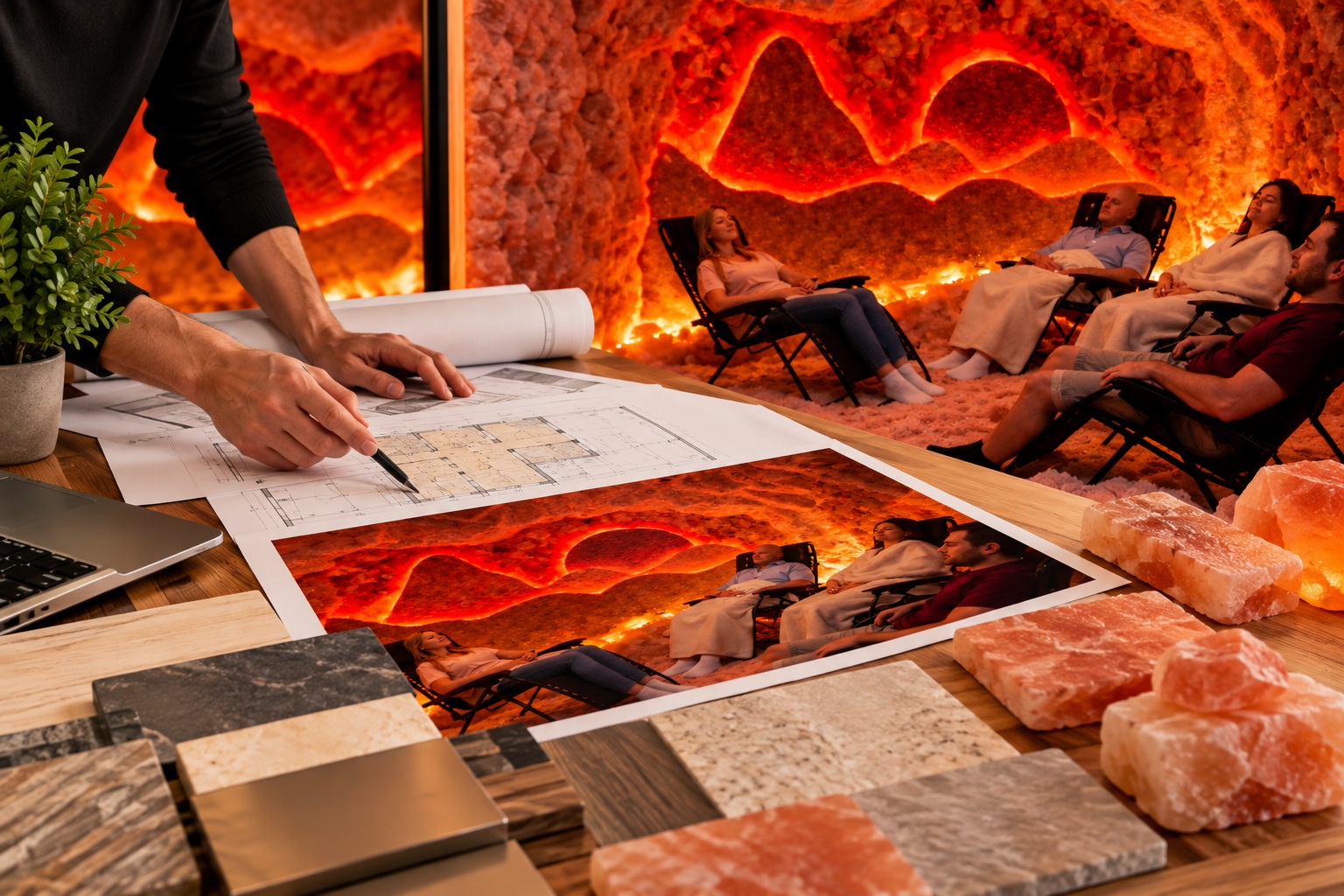
Investing in a salt cave can be an exciting opportunity for a spa, wellness center, hotel, resort, fitness business, or independent entrepreneur.
Salt caves and salt rooms can create a memorable wellness experience, introduce a distinctive service, and give customers another reason to return. However, the success of a salt cave investment depends on much more than placing a halogenerator in a room and adding a few Himalayan salt bricks to the walls.
One of the biggest mistakes a future owner can make is choosing a salt room builder solely because that company submitted the lowest estimate. A low price may appear to reduce financial risk, but a basic salt room may also create a basic customer experience. If the room does not look special, feel immersive, or operate as a professionally planned environment, it may not attract the attention, repeat visits, or pricing power the owner expected.
The better question is not, “How cheaply can I build a salt room?” It is, “What kind of salt cave will give this business the best opportunity to succeed for years to come?”
A Salt Cave Investment Is an Investment in an Experience
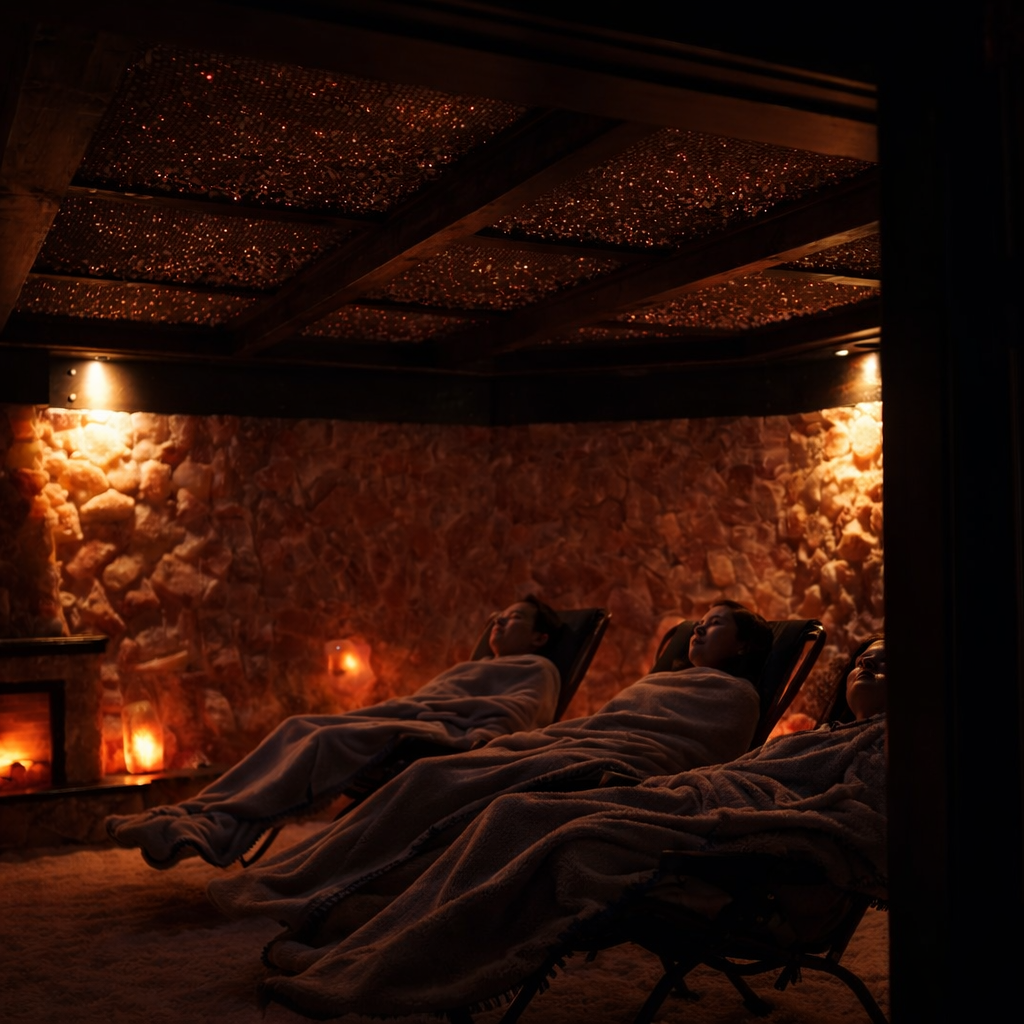
Customers do not evaluate a salt cave by counting the number of salt bricks on a wall. They respond to the complete experience: the design, atmosphere, comfort, lighting, sound, temperature, and feeling they have from the moment they enter the space.
A simple salt room may technically allow a business to add salt therapy to its menu, but that alone does not make the room a destination. An impressive commercial salt cave can become a signature feature, something guests remember, talk about, photograph, and recommend to friends.
That difference matters. When the finished space feels carefully designed and professionally built, a business may be better positioned to create memberships, packages, private sessions, group experiences, and complementary wellness events. The room becomes more than another service on the menu. It becomes part of the business's identity.
This is why professional salt room construction should be approached as a long-term business decision, not simply as a search for the lowest initial price.
Low Investment Can Lead to Low Impact
Every project has a budget, and responsible planning is essential. However, reducing the construction cost by removing important design, technical, or support elements can weaken the very qualities that make the business competitive.
A low-cost salt room may have limited salt coverage, minimal visual impact, and unsuitable materials or equipment selected without considering the room as a whole. It may also lack the planning needed for airflow, temperature, humidity, ventilation, electrical components, and long-term use in a salt-rich environment.
The result may be a room that looks unfinished, does not create a memorable experience, or requires corrections after opening. Those corrections can be disruptive and expensive. In some cases, an owner may need to temporarily close the room, replace materials, change equipment, or rebuild sections of the space. What appeared to be savings at the beginning can become additional construction costs and lost revenue later.
You get what you pay for, but in specialty construction, the consequences can be far greater: a poorly planned project may cost far more to correct than it would have cost to build properly from the beginning.
If You Are First in Your Area, Set a High Standard
Being the first business in a community to introduce a salt cave can be a major advantage. The first salt cave in an area has an opportunity to educate the public, shape customer expectations, and become the local name people associate with the experience.
That opportunity should not be wasted on a room that is easy for the next competitor to surpass.
Imagine opening a small, decorated salt room because it required the lowest investment. The community may initially be curious, but another business may later open a larger, more impressive salt cave nearby. If that new space offers stronger visual appeal, a more immersive atmosphere, and a better-designed customer journey, the original business may lose the advantage it worked to create.
Competition cannot be eliminated, but a distinctive, professionally constructed salt cave creates a higher standard for competitors to match. A strong original concept is more difficult to outshine than a generic room with a generator and a few salt bricks.
If you have the opportunity to be first, build a space people will remember as the standard—not merely the first one they happened to visit.
What Separates a Professional Salt Cave From a Basic Salt Room?
Professional salt cave construction brings the room's design and technical components together. Each feature should support the overall experience, operation, and durability of the space.
Complete salt wall construction
Salt wall building is more than attaching a few decorative bricks to painted walls. The amount of salt coverage, the type of salt material, the installation method, the lighting, and the relationship among the walls, floor, and ceiling all influence the character of the finished room.
Well-designed Himalayan salt walls create warmth, depth and visual identity. Natural salt boulders, salt bricks, and loose salt floors can be used to create very different environments, from a clean, contemporary salt room to a dramatic, cave-inspired retreat. The design should reflect the business, the available space and the experience the owner wants guests to remember.
Climate, airflow and ventilation planning
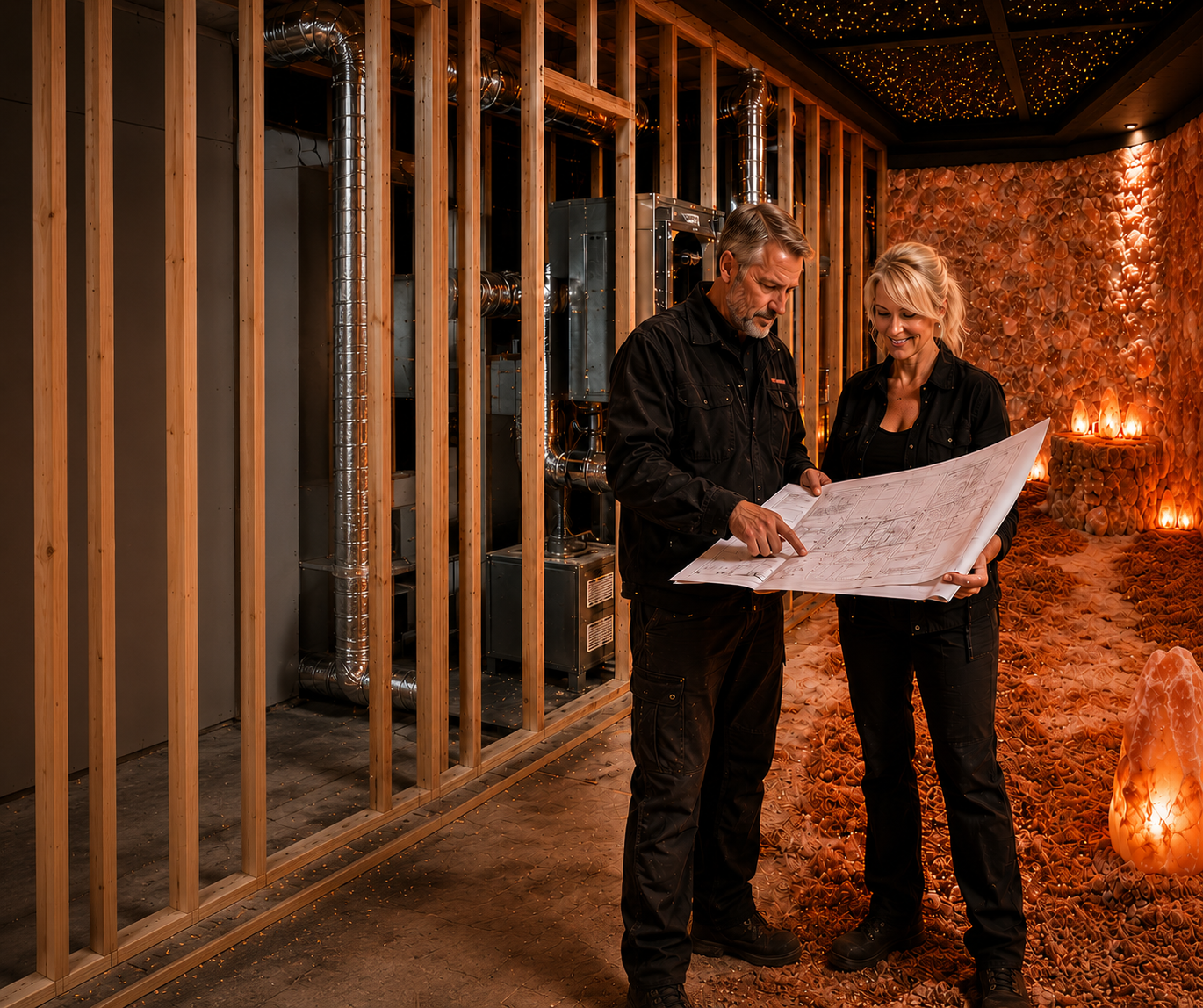
A commercial salt room is a specialized, occupied environment. Temperature, humidity, airflow and ventilation should be considered during the design process rather than treated as afterthoughts. The room also needs materials and components selected for use in a salt-rich setting.
These technical decisions may not be the first things customers notice, but they affect comfort, operation, maintenance, and the room's long-term performance.
The right halogenerator for the room
A halogenerator is an important part of a dry salt therapy environment, but owning a halogenerator does not automatically create a professional salt cave. The equipment should be selected for the room and integrated into a complete operating plan. Room size, airflow, session structure, and other conditions all matter.
The generator, climate system, salt surfaces, and room design should work as one coordinated environment.
An immersive, marketable design
The most successful salt caves are designed for people, not just for equipment. Seating capacity, accessibility, lighting, sound, entry experience, comfort, and the flow between sessions should all be considered.
An attractive salt cave is also easier to market. Strong visual design delivers better photography, more compelling social media content, and a memorable story to share with prospective customers. People are more likely to become curious about a space that looks unlike anything else in their community.
A Larger Investment Can Create Stronger Business Potential
Spending more money does not guarantee success. Location, management, marketing, pricing, customer service, and local demand all influence the return on any salt cave investment. However, investing appropriately in professional design and construction can give the business a stronger foundation.
A larger, more impressive salt cave may accommodate more guests per session, support premium positioning, and provide greater flexibility for memberships, private rentals, group programs, and special events. A memorable environment can also encourage repeat visits and word-of-mouth referrals.
These advantages can create a clearer path to return on investment than a room built solely to achieve the lowest possible opening cost. The goal is not to spend unnecessarily. We aim to direct the budget toward elements that improve customer experience, operating reliability, and long-term competitiveness.
The right investment is the one that supports the business model—not simply the smallest number on an estimate.
Why the Cheapest Salt Room Estimate May Not Be the Best Value
Salt room construction estimates can vary widely because companies may not be pricing the same scope of work. One proposal may include comprehensive design, extensive salt wall construction, suitable equipment, training, and continued support. Another may include only a basic generator, limited salt materials, and installation.
Before comparing prices, compare what the prices actually include.
Ask prospective salt room builders:
- What is included in the proposed design and construction scope?
- How much of the walls and floor will receive salt coverage?
- How will temperature, humidity, airflow, and ventilation be addressed?
- Are the proposed materials appropriate for a salt-rich environment?
- How will the halogenerator be selected and integrated with the room?
- What training, warranty, and ongoing support will be provided?
- Does the builder have experience completing commercial salt rooms and salt caves?
These questions help reveal whether a lower estimate represents true efficiency or simply a smaller, less complete project. Choosing the cheapest builder without understanding the differences can lead to costly surprises during construction or after the business opens.
Choose a Salt Cave Builder With Long-Term Experience
Building salt rooms and salt caves is a specialized field. A qualified salt cave builder should understand both the visual design and the practical demands of a commercial wellness environment. The company should be able to explain what is included, help the owner plan for the available space, and provide support beyond the initial installation.
Experience also matters when unexpected conditions arise. Every building is different. Room dimensions, ceiling heights, existing mechanical systems, accessibility requirements, and the owner’s business goals can all affect the project. A custom approach allows the salt cave design to respond to the space rather than forcing every client into the same basic package.
Before signing a contract, review completed projects, ask detailed questions, and determine whether the builder’s previous work reflects the standard you want to bring to your community.
Build Your Salt Room Right the First Time
A salt cave can be a powerful addition to a wellness business, but the room must offer customers a reason to visit and a reason to return. A basic salt room built around the lowest estimate may save money initially, yet it may also be easier for a new competitor to surpass.
If you are investing in a salt cave, think beyond opening day. Consider how the room will look in photographs, how it will feel during a session, how many guests it can serve, how it will support your pricing, and how it will compete when another wellness business enters the market.
Professional salt room construction is not about spending the most. It is about building with intention, using the right materials and systems, and creating an experience that supports your business's long-term value.
Salt Cave Builder designs and builds custom salt rooms, salt walls, and Himalayan salt caves for commercial and residential clients nationwide. If you are planning a salt cave investment and want to understand the possibilities for your space, call 802-770-3138 to discuss your project. Build it right the first time, and set a standard your competition will struggle to match. www.saltcavebuilde.com Dr. Margaret Smiechowski