Salt Room Materials: Why Construction Matters
Learn why drop ceilings and improper materials can compromise salt caves, climate control, durability, and the guest experience.
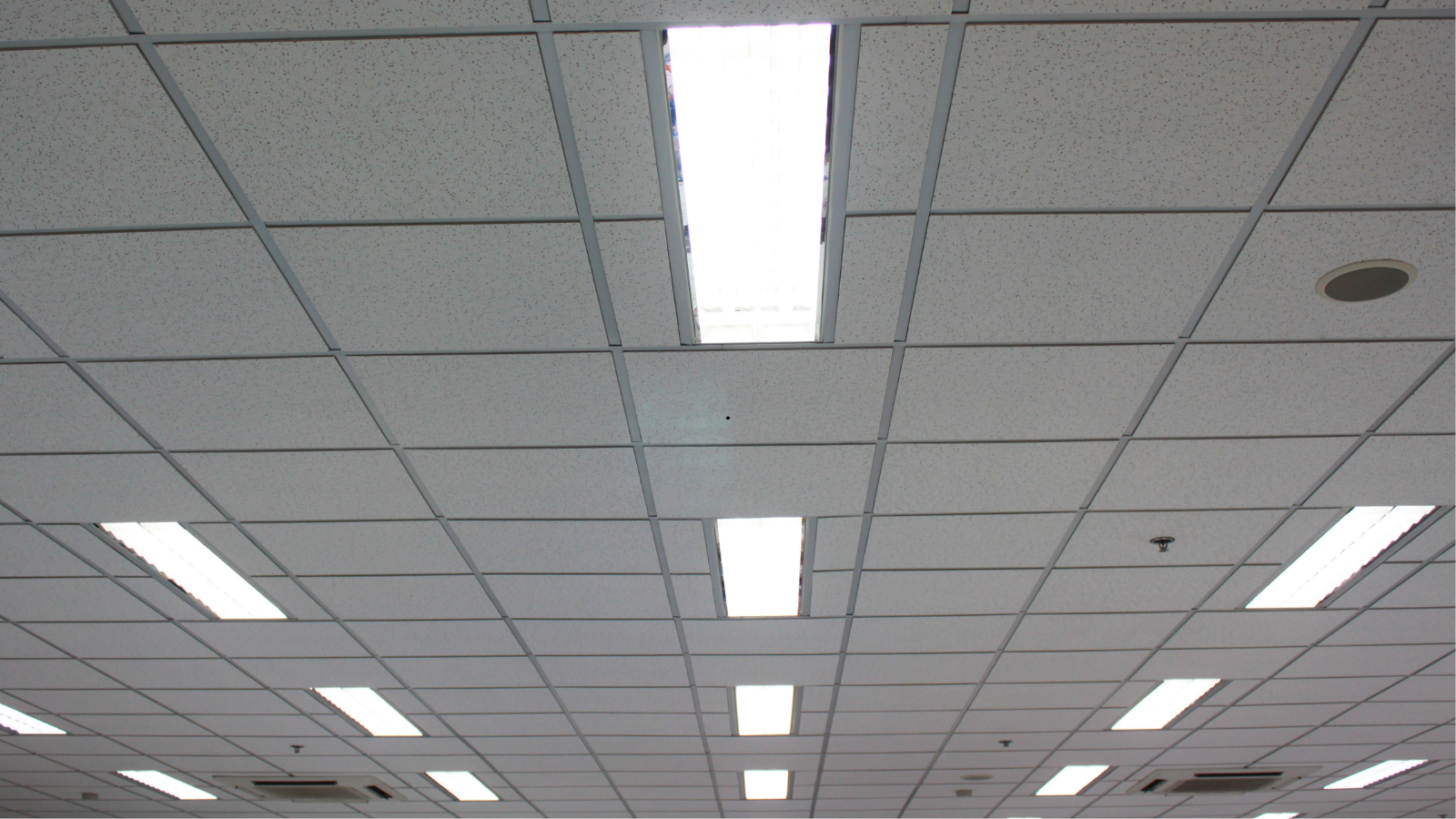
A Drop Ceiling Belongs in an Office, Not a Salt Cave
A drop ceiling may work well in an office, retail store, or ordinary treatment room. However, its materials and structure don't belong in a professionally built salt room or salt cave. Salt therapy spaces create conditions that are very different from those in a standard commercial room. Fine salt particles enter the air, humidity must be managed, and every surface becomes part of a specialized environment. Therefore, materials cannot be selected simply because they are inexpensive, familiar, or easy to install.
When a builder treats a salt cave like a decorated office, the result may look acceptable at first. Yet the problems often appear later. Metal components can corrode. Ceiling tiles can absorb moisture. Air may move through uncontrolled spaces above the ceiling. Finishes and fixtures may also deteriorate faster than expected.
A professional salt cave is not a regular room with salt added to it. It is a purpose-built wellness space. Every ceiling system, fastener, electrical component, finish, and ventilation detail must work safely within a salt-rich microclimate.
Salt Room Materials Must Withstand a Corrosive Environment
Salt is naturally corrosive to many metals. During an active halotherapy session, a halogenerator disperses very fine dry salt particles into the room. Those particles can settle on ceiling grids, wires, fasteners, fixtures, and other exposed components.
Most suspended drop ceilings rely on a lightweight metal grid. Over time, salt and moisture exposure may cause that metal to corrode. Rust is not only unattractive. It can weaken connections, damage ceiling components, and reduce the structure's long-term reliability.
The concern extends beyond the visible ceiling grid. Metal parts above the tiles may also be exposed. Because they are hidden, early corrosion can be easy to miss. By the time stains or sagging tiles become visible, deterioration may already be underway.
For this reason, professional salt cave construction requires careful material selection. Builders must consider how each component will react to airborne salt, moisture, temperature changes, and routine cleaning. Materials that perform well in an office may fail much faster inside a salt therapy room.
Drop Ceilings Can Undermine Salt Cave Climate Control
A salt room or salt cave needs more than a halogenerator. It also needs properly designed climate control. Temperature, humidity, ventilation, and airflow must work together to keep the room comfortable and the equipment operating as intended.
A typical drop ceiling does not create the strong, sealed, purpose-built room envelope needed for reliable environmental control. Air can move above, around, and through the ceiling system. Ceiling tiles may shift, absorb moisture, or allow leakage into the plenum. As a result, the room can become harder to balance and maintain.
Proper airflow must also be calculated for the room's size, occupancy, layout, and equipment. The system should distribute and remove air as designed. It must also comply with applicable building, mechanical, fire, and ventilation requirements. A decorative ceiling cannot replace professional engineering or a correctly designed structure.
If you see a standard office-style drop ceiling inside a salt room, consider it a serious warning sign. It suggests that the facility may not have been designed as a complete, professionally controlled halotherapy environment. The room may still contain salt and a halogenerator. However, that alone does not prove that it maintains the conditions needed for consistent operation and effective delivery of dry salt aerosol.
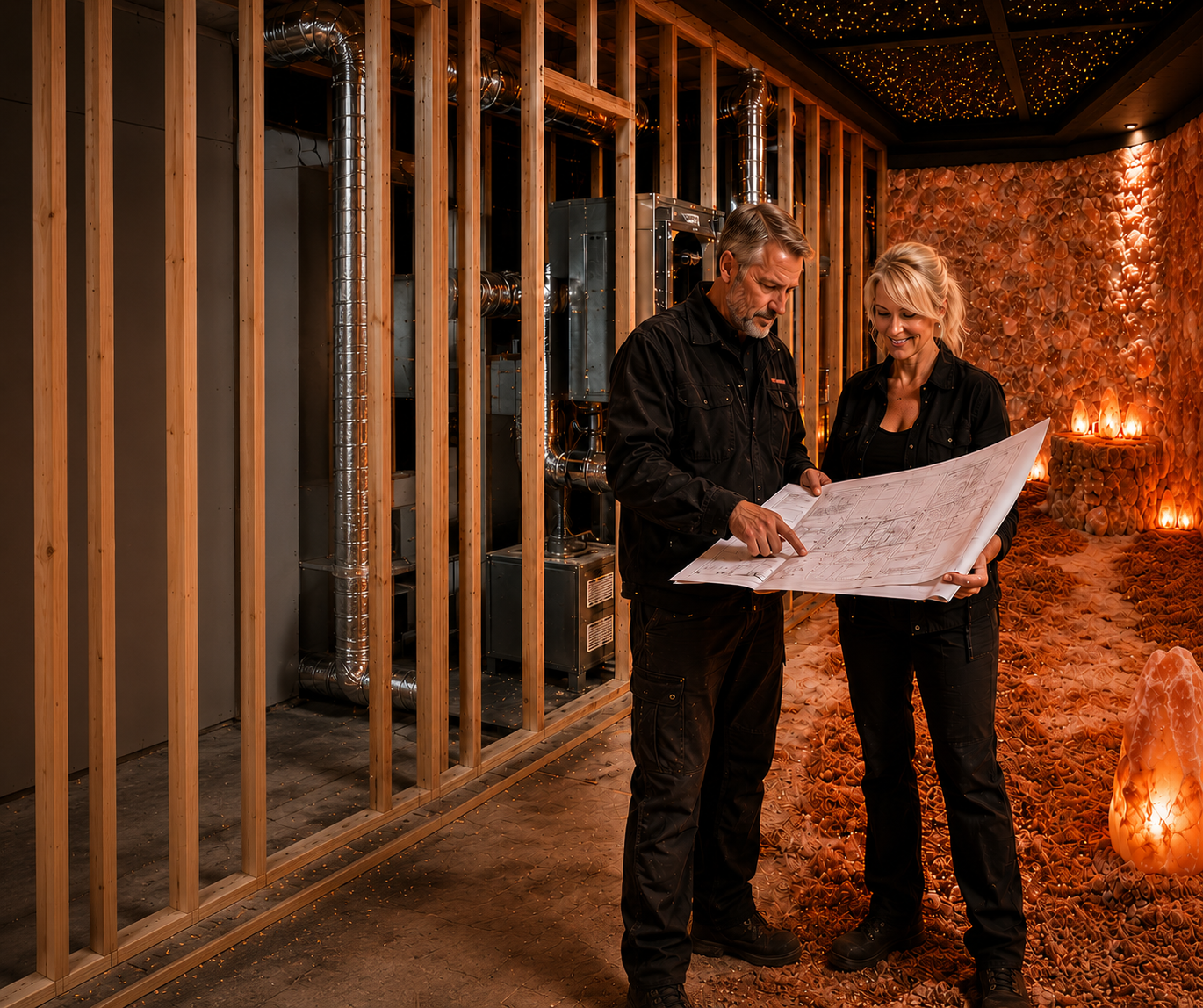
Professional Salt Cave Construction Starts Behind the Walls
Guests usually notice the salt walls, lighting, seating, and overall atmosphere first. However, some of the most important decisions are hidden behind those finishes. The ceiling structure, ventilation system, electrical work, moisture management, fasteners, adhesives, and protective materials all affect performance.
A qualified salt cave builder selects materials as part of one complete system. That system must support the room's design, climate controls, halogenerator, occupancy, maintenance plan, and expected lifespan. Each element must also work with the others.
For example, an attractive light fixture is not a good choice if salt can quickly damage its internal components. An inexpensive fastener is not a bargain if it rusts behind the wall. Likewise, a ceiling that looks finished is not suitable if it allows uncontrolled airflow or cannot support the intended cave structure.
Good construction is rarely defined by what looks easiest on installation day. Instead, it is defined by how safely, consistently, and beautifully the room performs for years.
DIY Salt Caves Can Damage Trust in Salt Therapy
DIY salt rooms are not only a concern for the individual business owner. They can also hurt the salt therapy industry as a whole.
Many guests do not know the difference between a decorative salt room and a professionally constructed salt cave. They may visit a room with a few illuminated salt bricks, an unsuitable ceiling, and little or no environmental control. If the experience feels ordinary or inconsistent, they may assume that every salt cave works the same way.
That first impression matters. A guest who does not notice any benefit may decide that salt therapy has nothing to offer. They may never visit another facility, even if the next one was designed and operated to a much higher standard. They may also share their disappointment with friends or post a negative review.
As a result, poorly planned rooms can reduce public confidence in the entire industry. They make it harder for professional operators to explain why construction quality, climate control, salt coverage, airflow, and halogenerator calibration matter.
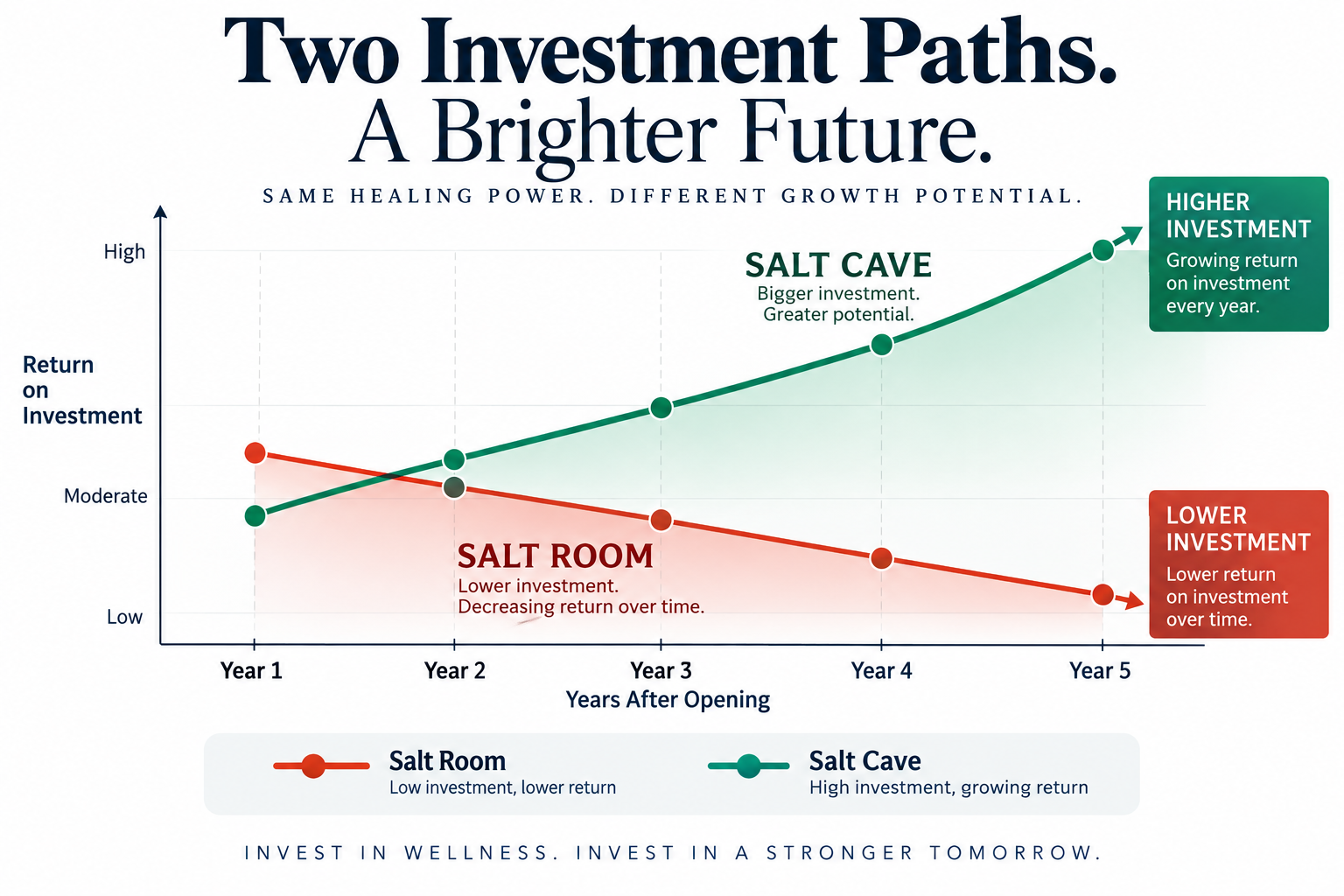
Business owners also carry significant risk. A low-cost DIY project may seem affordable at first. However, corrosion, moisture problems, equipment failure, and reconstruction can make it far more expensive later. In many cases, building the room correctly the first time is the more responsible investment.
How to Choose Materials for a Salt Room or Salt Cave
Before construction begins, ask how every proposed material will perform in a salt-rich environment. Do not evaluate products only by appearance or initial price.
Your salt cave builder should be able to explain:
- How the ceiling and walls support the complete cave structure
- Which materials are exposed to airborne salt
- How metal components are protected from corrosion
- How temperature, humidity, ventilation, and airflow are controlled
- Whether electrical fixtures are appropriate for the environment
- How the halogenerator works with the room's climate-control system
- How the room will be cleaned, inspected, and maintained
- How the design follows applicable building, fire, electrical, and mechanical requirements
These questions help you compare complete construction systems, not just attractive renderings or low estimates.
Build Your Salt Cave Correctly the First Time
The right salt room materials protect more than the appearance of your space. They support durability, safety, climate control, reliable operation, and the experience your guests expect. The wrong materials can lead to corrosion, unstable components, uneven airflow, and expensive reconstruction.
Salt Cave Builder has helped entrepreneurs, wellness centers, spas, hotels, medical practices, and homeowners create custom salt caves and salt rooms for more than two decades. We understand that a successful salt therapy space must combine specialized construction, carefully selected materials, environmental control, and an unforgettable guest experience.
If you are planning to build a salt cave or salt room, contact us before construction begins. We can help you evaluate your space, understand the essential systems, avoid costly mistakes, and create a salt therapy environment designed for long-term performance.
Call Salt Cave Builder at (802) 770-3138 or email saltcavevt@gmail.com to discuss your project.