Why DIY Salt Rooms Fail | Professional Salt Cave Construction
DIY salt rooms cause corrosion, code violations, and client safety risks. Build a real salt cave with expert, code-compliant halotherapy design.
Why DIY Salt Rooms Are a Growing Problem — And How Proper Halotherapy Design Protects Safety, Investment, and Reputation
The rise in wellness tourism and natural therapies has fueled rapid growth in the salt room and halotherapy industry across the United States.
However, a concerning trend is emerging: more and more DIY salt rooms are being constructed by following basic generator instruction sheets or relying solely on equipment manufacturers for building guidance.
This approach gives the impression that pumping salt into a room is all that is required to create halotherapy.
Unfortunately, that idea is misleading, unsafe, and in many cases places business owners at risk of legal, financial, and structural consequences.
At Salt Cave Inc., we specialize in professional salt-cave design and code-compliant salt-room construction.
We have rebuilt, repaired, and consulted on countless spaces where
improper installation created hazards for clients and costly damage to buildings. You can learn more about proper construction methods here:
https://saltcavebuilder.com/salt-cave-construction
Salt Rooms Are Regulated Occupancy Spaces Not Decorative Additions
A salt room is considered an occupied space where clients spend time for wellness services.
That means the room must meet the same standards as comparable wellness and assembly environments. States that follow the International Mechanical Code (IMC) and other codes, such as the Massachusetts 780 CMR Building Code, require proper ventilation, fire-safe materials, noncombustible finishes, climate control, and defined air exchange.
These regulations exist because the space is used by the public. It does not matter whether a halogenerator manufacturer advertises the room as simple or “plug-and-play.” If the room does not meet occupancy requirements, it may be flagged by inspectors, compromised by insurance providers, or disallowed by zoning or health departments.
Reference links:
International Mechanical Code —
https://codes.iccsafe.org
Massachusetts 780 CMR —
https://www.mass.gov/laws-regulations/780-cmr
Why “Blowing Salt into the Air” Does Not Create Halotherapy
Many DIY salt room builders believe that pointing a blower or generator into the space achieves a therapeutic result. In reality, this produces aerosolized salt without controlling concentration, humidity, airflow pathways, or exhaust.
When salt is dispersed without proper design, the dosing is inconsistent, and clients may be exposed to overly dense particulate.
Beyond the health implications, salt combined with moisture becomes corrosive.
Over time, it can damage HVAC equipment, degrade ductwork, affect fixtures, infiltrate electrical components, and weaken materials hidden behind walls.
Many DIY owners discover problems only when equipment fails or corrosion becomes visible, long after the damage has started.
The Misconception of Salt Walls and Why They Mislead Consumers
A growing number of businesses advertise a “salt room” when the space contains nothing more than a decorative salt brick wall and a generator running in the background.
A wall made of salt is visually appealing, but it does not impact the microclimate, does not regulate humidity, and does not establish a consistent therapeutic environment.
When clients leave covered in visible salt dust, that is not halotherapy; it is the result of a space that was not engineered for therapy or safety.
If your focus is on building a real therapeutic environment rather than a decorative display, explore the importance of full-room design here:
https://saltcavebuilder.com/salt-cave-design
How Halotherapy Truly Came to the United States — The First Salt Cave
Salt therapy did not enter the U.S. through equipment sales or minimalistic kits.
It was made possible by the expertise and vision of Dr. Margaret Smiechowski, who built the first salt cave in the United States and introduced halotherapy technology to the American market.
Her work was grounded in scientific research, material evaluation, and decades of knowledge from natural salt cave traditions in Eastern Europe.
Every component of her salt cave projects was selected for a reason: climate stability, safety, corrosion resistance, and therapeutic consistency. Her salt caves are considered works of art in both design and engineering because they are truly immersive environments that honor the principles of natural salt therapy.
You can learn more about her history and contributions here:
https://saltcavebuilder.com/about-dr-margaret-smiechowski
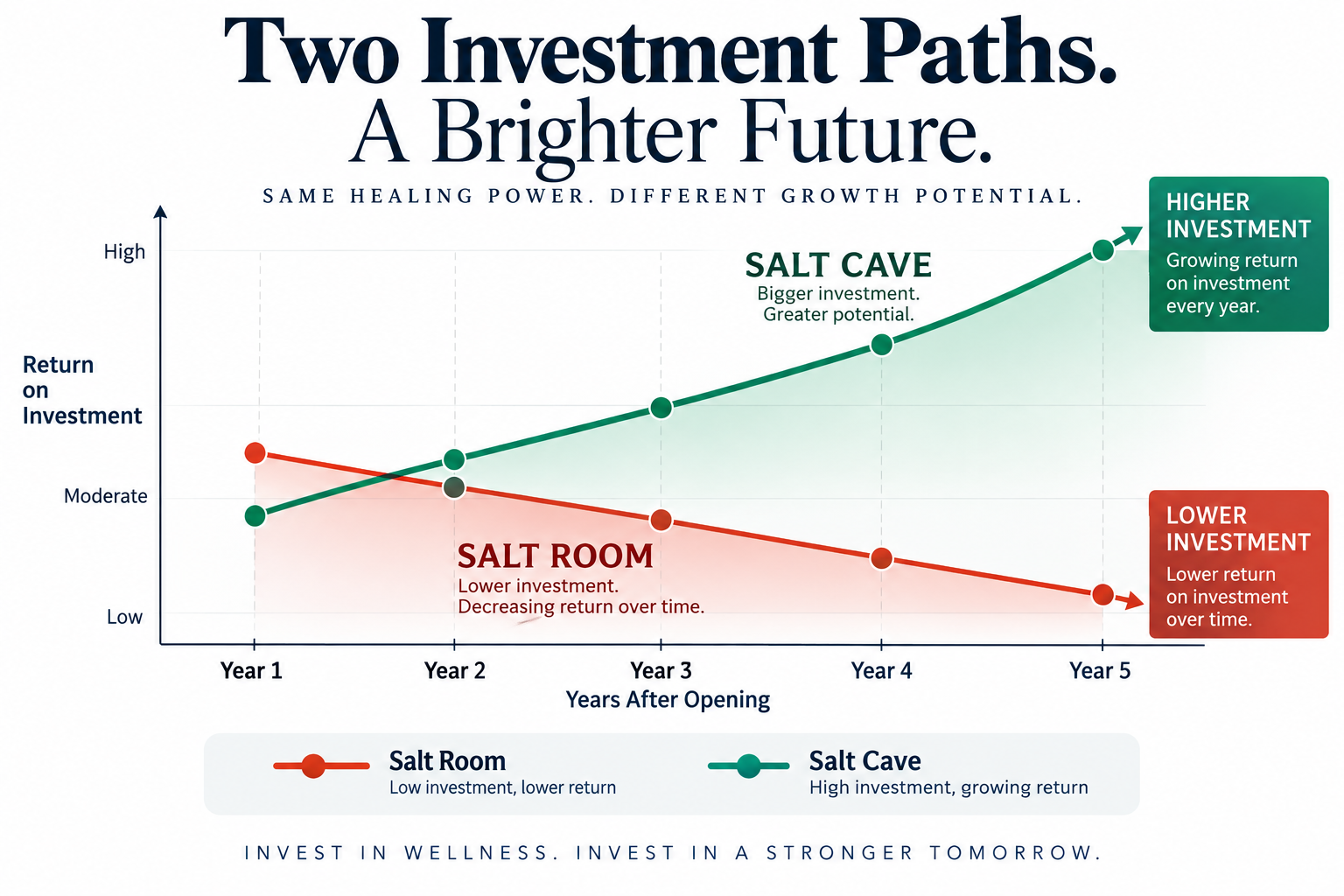
A Real Salt Cave Is Not a Low-Budget Project
Constructing a salt cave is not a $13,000 “weekend build.” Proper materials must be used, climate control must be engineered, and salt must remain contained — not drifting into hallways or entering the building’s mechanical system.
When salt is allowed to blow freely, especially when directed by forced airflow, there is a genuine risk of code violations, insurance issues, and potential shutdowns.
If you are unsure whether your salt room is built correctly or you purchased a system that now raises concerns, consider a design review or consultation:
https://saltcavebuilder.com/salt-room-consulting
Your Space, Your Clients, and Your Reputation Depend on Proper Construction
A correctly built salt cave provides a safe, calming, and effective environment that clients trust. A poorly built room does the opposite. It damages the credibility of halotherapy as a therapeutic modality and places business owners in a vulnerable position.
The future of halotherapy in the U.S. will be shaped not by shortcuts but by standards, safety, and professionalism.
If you are planning to build a salt room, renovate one, or verify whether your current space meets safe, code-compliant standards, reach out to the team with more experience than any other builder in America. Proper halotherapy should support your business, not threaten it.
To discuss your project, ask questions, or request an evaluation, contact Salt Cave Inc:
802-770-3138
https://saltcavebuilder.com/contact